Surprisingly, there doesn't seem to be much of an audience for Mexican cannibal dramas at 4.30pm on a Sunday afternoon and so it was that I enjoyed an almost private screening of 'We Are What We Are' at the Covent Garden Odeon.
The set-up finds a decidedly eccentric family left bereft by the sudden death of their father. Who now is going to bring home the bacon? Or rather, the human flesh they seem compelled (for never fully explained reasons) to devour? The intense kids prove pretty incompetent in the kidnap and murder stakes, but the harridan-like mother is more dedicated to the pursuit of fresh meat.
Even as a connoisseur of the somewhat bizarre I found this a hard film to categorise. The first two thirds are something like a slow-moving art-house movie about social alienation in a developing country. The final third a bloodbath of shootings, shovels-to-the-head, gougings, disembowelling and flesh-eating. It's one of those films that it would be difficult to call 'good' but it is oddly compelling anyway.
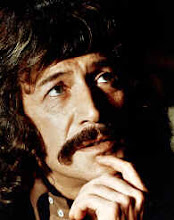
In that sense, and in others, 'We Are What We Are' is oddly reminiscent of a British cannibal film from the early 70s. The mighty 'Death Line' featured a crazed cannibal - a descendant of buried alive construction workers - on the loose on the London Underground, howling his memorable cry of 'Mind the gap!'. Both films have a dark, murky atmosphere; feature a pair of somewhat sleazy cops on the trail of the cannibals and have a certain sympathy for their flesh-eating protagonists. Has Jorge Michel Grau, director of 'We Are What We Are', taken a cue from this earlier work? It would be nice to think so, and know that great British hokum is informing the stranger offerings from foreign fields.
Sunday, 14 November 2010

Wednesday, 13 October 2010
Metropolis, Monsters and Marks
The first film I ever saw in the cinema was a landmark - Star Wars. I can still remember that staggering opening with the gigantic spaceship lumbering across the screen, and my dad tells me I stood up through the entire film. At the age of four who knows how much of it I understood but then the dialogue wasn't the point - the visuals were. There's a rule for writing a film script that says that you should imagine the film as a silent movie and work out if the audience could still understand what is going on purely from the pictures, a rule that George Lucas promptly forgot about when he came to make the dire prequels.
The German silent classic Metropolis, which I saw at the Roundhouse with a full orchestra, was made fifty years before even Star Wars, is still one of the most expensive films ever made when inflation is taken into account, and still looks impressive now. The tale of a great mechanised city, and a mad scientist who creates a robot facsimile of the saintly Maria to whip the workers up into revolution - of course the florid acting is dated but the visuals are remarkable, from the iconic design of the robot to the giant machines that power the city and eventually lead to its near downfall.
Mark Gatiss, a geek after my own heart, began an exploration of horror films on BBC4 on Monday. He focused on the real oldies - the Universal Dracula/Frankenstein series which were not my favourites as a lad (I was more of a Hammer man) but it was good to see these comparatively rarely shown films get a championing. Seeing the 1935 Bride of Frankenstein in a prime-time slot was also a bit of a treat - a very eccentric film with, again, some amazing visuals. No doubt the director had seen Metropolis - indeed Brigitte Helm who played Maria was considered for the role of the electricly enlivened Bride.
It was the old films, not modern ones, that got me interested in the cinema in the first place. In the 80s it was common to come home from school and find some old movie - not necessarily a classic, just a good solid entertainment - on BBC2 or Channel 4. How many dinners did I eat sat in front of Basil Rathbone's Sherlock Holmes, or Laurel and Hardy, or the Carry On gang, or even The Man From Uncle? Or I'd video tape the old horror movies that would be shown late on a Saturday or at 2am on a Thursday morning. They didn't scare me even then, but they had a wonderful mix of cheese, charm and imagination that kept me watching.
House of Games at the Almeida in Islington is, in a tenuous link, also based on a (relatively) old film. It's a story of con men and their marks, with a high-flying psychiatrist being drawn into the lifestyle of a group of tricksters who frequent the titular bar. Although in a way the play is a little reminiscent of an upmarket episode of Hustle, it's grippingly acted and although some of the twists and turns are guessable it keeps up a level of tension and wit that's only slightly dampened by a not entirely satisfying ending.
The German silent classic Metropolis, which I saw at the Roundhouse with a full orchestra, was made fifty years before even Star Wars, is still one of the most expensive films ever made when inflation is taken into account, and still looks impressive now. The tale of a great mechanised city, and a mad scientist who creates a robot facsimile of the saintly Maria to whip the workers up into revolution - of course the florid acting is dated but the visuals are remarkable, from the iconic design of the robot to the giant machines that power the city and eventually lead to its near downfall.
Mark Gatiss, a geek after my own heart, began an exploration of horror films on BBC4 on Monday. He focused on the real oldies - the Universal Dracula/Frankenstein series which were not my favourites as a lad (I was more of a Hammer man) but it was good to see these comparatively rarely shown films get a championing. Seeing the 1935 Bride of Frankenstein in a prime-time slot was also a bit of a treat - a very eccentric film with, again, some amazing visuals. No doubt the director had seen Metropolis - indeed Brigitte Helm who played Maria was considered for the role of the electricly enlivened Bride.
It was the old films, not modern ones, that got me interested in the cinema in the first place. In the 80s it was common to come home from school and find some old movie - not necessarily a classic, just a good solid entertainment - on BBC2 or Channel 4. How many dinners did I eat sat in front of Basil Rathbone's Sherlock Holmes, or Laurel and Hardy, or the Carry On gang, or even The Man From Uncle? Or I'd video tape the old horror movies that would be shown late on a Saturday or at 2am on a Thursday morning. They didn't scare me even then, but they had a wonderful mix of cheese, charm and imagination that kept me watching.
House of Games at the Almeida in Islington is, in a tenuous link, also based on a (relatively) old film. It's a story of con men and their marks, with a high-flying psychiatrist being drawn into the lifestyle of a group of tricksters who frequent the titular bar. Although in a way the play is a little reminiscent of an upmarket episode of Hustle, it's grippingly acted and although some of the twists and turns are guessable it keeps up a level of tension and wit that's only slightly dampened by a not entirely satisfying ending.
Sunday, 5 September 2010
A two-act, five character money-maker
Deathtrap, at the Noel Coward Theatre, is a play about a play. The central character is Sidney Bruhl, a once-successful but now terminally blocked playwright, who receives in the post a very promising two-act, five character thriller by a young unknown called Clifford Anderson, and in the opening scenes is sorely tempted to do away with the upstart and claim the surefire hit as his own. The play within the play is of course also called Deathtrap and the running joke of the piece is that the audience is actually watching a 'two-act, five character thriller' (which incidentally was also a huge money-maker, having a four year run on Broadway from 1978).
In essence Deathtrap, like that other long-running nerve-jangler, The Woman in Black, is a piece that depends heavily on its own theatricality. This may explain why the 1982 film version, starring Michael Caine and Christopher Reeve, was unremarkable if still entertaining. Here, Sidney Bruhl is played by Simon Russell Beale who's cynical luvvie-ness is ideal for the role of the embittered, smart-mouthed author. Jonathan Groff from Glee also acquits himself well as the seemingly callow Clifford.
If I haven't said much about the plot, that is because to do so would be to reveal far too much; but suffice to say that despite having seen the film version at least twice and knowing what to expect I was still surprised by the story's turns, so effective were the actors and director in building up tension. Of special note is the use of lighting and sound, particularly in a scene set during a lightning storm where the viewer just knows that the next flash will reveal something awful and is pleasantly shocked when it does just that.
In essence Deathtrap, like that other long-running nerve-jangler, The Woman in Black, is a piece that depends heavily on its own theatricality. This may explain why the 1982 film version, starring Michael Caine and Christopher Reeve, was unremarkable if still entertaining. Here, Sidney Bruhl is played by Simon Russell Beale who's cynical luvvie-ness is ideal for the role of the embittered, smart-mouthed author. Jonathan Groff from Glee also acquits himself well as the seemingly callow Clifford.
If I haven't said much about the plot, that is because to do so would be to reveal far too much; but suffice to say that despite having seen the film version at least twice and knowing what to expect I was still surprised by the story's turns, so effective were the actors and director in building up tension. Of special note is the use of lighting and sound, particularly in a scene set during a lightning storm where the viewer just knows that the next flash will reveal something awful and is pleasantly shocked when it does just that.
Sunday, 1 August 2010
Is all that we see or seem...
I've never subscribed to the auteur theory of film direction - that the director is the author of a film and all his work reflects his creative vision - after all, John Huston directed both The Maltese Falcon and Escape to Victory and there are countless other examples of individual directors making films of wildly varying quality. M Night Shyamalan for instance seems to have made a career out of disappointing people after his one decent film.
However, British director Christopher Nolan has, over a relatively short period, produced a remarkably consistent resume which includes Memento, The Prestige (a film I have raved about for some time but which no one else seems to have seen) and The Dark Knight; three of the best films of the last decade. His latest is Inception, the biggest budget art movie you'll ever see and the most intelligent science fiction films in years.
Leo Di Caprio, an actor who it has to conceded can carry a movie, is Cobb, a master of dreams who is hired to implant an idea in a businessman's head. That's the basic plot, but such are its convolutions that at one point in the film we find ourselves watching a dream within a dream within a dream within a dream. That is Inception's greatest strength, that the audience has to concentrate throughout or risk losing the thread entirely. How many Hollywood blockbusters can that be said about?
If the film has a flaw though, it's that it is almost entirely an experience of the mind and of the eye. There is little heart to it. The supporting cast is superb, yet their characters are mostly undeveloped and only at the end do we really care what happens to the protagonist. Is Inception a brilliant film? Yes, probably. Did I love it? I'm not sure. But to see a film that rises so far above mediocrity is such a rarity these days that one shouldn't be churlish. 10/10.
However, British director Christopher Nolan has, over a relatively short period, produced a remarkably consistent resume which includes Memento, The Prestige (a film I have raved about for some time but which no one else seems to have seen) and The Dark Knight; three of the best films of the last decade. His latest is Inception, the biggest budget art movie you'll ever see and the most intelligent science fiction films in years.
Leo Di Caprio, an actor who it has to conceded can carry a movie, is Cobb, a master of dreams who is hired to implant an idea in a businessman's head. That's the basic plot, but such are its convolutions that at one point in the film we find ourselves watching a dream within a dream within a dream within a dream. That is Inception's greatest strength, that the audience has to concentrate throughout or risk losing the thread entirely. How many Hollywood blockbusters can that be said about?
If the film has a flaw though, it's that it is almost entirely an experience of the mind and of the eye. There is little heart to it. The supporting cast is superb, yet their characters are mostly undeveloped and only at the end do we really care what happens to the protagonist. Is Inception a brilliant film? Yes, probably. Did I love it? I'm not sure. But to see a film that rises so far above mediocrity is such a rarity these days that one shouldn't be churlish. 10/10.
Saturday, 29 May 2010
Small can be beautiful
Dream of the Dog by Craig Higginson is billed as 'a richly textured and complex story of South Africa's emerging democracy, and its continued negotiation with its past in order to find a workable identity for its future'. That does the play a disservice really, making it sound like a slice of worthy but probably defiantly unentertaining liberal soul-searching.
Actually, it is a gripping 75 minutes of intimate theatre, in the none-more-intimate surrounds of Trafalgar Studios, a venue so cosy that when I was last there one of the actors trod on my foot during a particularly crucial moment.
Janet Suzman plays an elderly woman living with her unpleasant but senile husband in the South African bush. The farm has been sold and she is preparing for a move to Durban to be by the sea. On the eve of the move she is visited by the mysterious 'Look Smart', her former garden-boy who has come good and has returned on a mission to dig up the past and reveal a terrible crime.
Dream of the Dog is a brilliantly acted piece with Ariyon Bakare (who was clearly wasted in his previous credits in Family Affairs and Doctors) as Look Smart matching Suzman all the way. It's exactly the right length for the subject matter and whilst it does indeed have something to say about South African society and history, it's a good, solid drama in its own right.
The other production at Trafalgar Studios - Holding the Man - is also worth a look, although this true story of a gay relationship in 70s/80s Australia does suffer a little from a jarring if understandable shift in tone from a comic first half to a tragic second act.
Actually, it is a gripping 75 minutes of intimate theatre, in the none-more-intimate surrounds of Trafalgar Studios, a venue so cosy that when I was last there one of the actors trod on my foot during a particularly crucial moment.
Janet Suzman plays an elderly woman living with her unpleasant but senile husband in the South African bush. The farm has been sold and she is preparing for a move to Durban to be by the sea. On the eve of the move she is visited by the mysterious 'Look Smart', her former garden-boy who has come good and has returned on a mission to dig up the past and reveal a terrible crime.
Dream of the Dog is a brilliantly acted piece with Ariyon Bakare (who was clearly wasted in his previous credits in Family Affairs and Doctors) as Look Smart matching Suzman all the way. It's exactly the right length for the subject matter and whilst it does indeed have something to say about South African society and history, it's a good, solid drama in its own right.
The other production at Trafalgar Studios - Holding the Man - is also worth a look, although this true story of a gay relationship in 70s/80s Australia does suffer a little from a jarring if understandable shift in tone from a comic first half to a tragic second act.
Saturday, 24 April 2010
Put them in the right order, and you can give the world a little nudge
There's a line in Tom Stoppard's The Real Thing (currently at the Old Vic) that made me smile in recognition - 'I don't like artists, I like singles' - but having seen Stoppard's Arcadia last year, and now this revival, I may reconsider that philosophy.
The Real Thing is a play about love, and also about writing. The protagonist, Henry (superbly played by Toby Stephens) is an intellectual smart-ass playwright with more than a passing resemblance to Stoppard himself. He leaves his wife Charlotte for actress Annie, who in turn cuckolds him with a young lover. Henry is a man who uses his command of language as a weapon, but he also defends the use of words as a means of advancing ideas. He compares them to cricket bats, which are made out of several pieces of wood balanced in perfect proportion so as to send a ball on its way at just the right velocity.
This is a fine play, the real thing in more ways than one, with excellent acting, witty dialogue and a literary style that is unusual in modern theatre but never quite tips over into pretension. As a humble creative writing student myself, it's when one watches a play like this and then struggles even to write a short review, that one realises the gulf that exists between we aspirants and the truly gifted. But it gives you something to aim for, even if you're having a little trouble getting off the launch pad.
The Real Thing is a play about love, and also about writing. The protagonist, Henry (superbly played by Toby Stephens) is an intellectual smart-ass playwright with more than a passing resemblance to Stoppard himself. He leaves his wife Charlotte for actress Annie, who in turn cuckolds him with a young lover. Henry is a man who uses his command of language as a weapon, but he also defends the use of words as a means of advancing ideas. He compares them to cricket bats, which are made out of several pieces of wood balanced in perfect proportion so as to send a ball on its way at just the right velocity.
This is a fine play, the real thing in more ways than one, with excellent acting, witty dialogue and a literary style that is unusual in modern theatre but never quite tips over into pretension. As a humble creative writing student myself, it's when one watches a play like this and then struggles even to write a short review, that one realises the gulf that exists between we aspirants and the truly gifted. But it gives you something to aim for, even if you're having a little trouble getting off the launch pad.
Saturday, 17 April 2010
Remakes
I've always been sceptical about remakes, especially the recent trend to remake comparatively recent films like Halloween and Nightmare on Elm Street (franchises that only actually ended the first time in the last decade or so), but this latest atrocity surely takes the biscuit.
Death at a Funeral is a moderately amusing comedy directed by Frank 'Yoda' Oz that came out in 2007.
Death at a Funeral is a remake directed by Neil la Bute, that is coming out in 2010.
It even features one of the same actors reprising his role!
If Death at a Funeral Mark One was in Korean or Swahili then there might be some small justification for such a piece of filmic depravity but the film is in English, was directed by an American and even features some American actors in the cast.
Death at a Funeral is a moderately amusing comedy directed by Frank 'Yoda' Oz that came out in 2007.
Death at a Funeral is a remake directed by Neil la Bute, that is coming out in 2010.
It even features one of the same actors reprising his role!
If Death at a Funeral Mark One was in Korean or Swahili then there might be some small justification for such a piece of filmic depravity but the film is in English, was directed by an American and even features some American actors in the cast.
There have of course been a few justified remakes, a surprising example being the Clooney/Pitt/Damon Oceans Eleven which was a big improvement on the Rat Pack's original, but really the way things are going we can envisage a day when the remake is released before the original...
Subscribe to:
Posts (Atom)